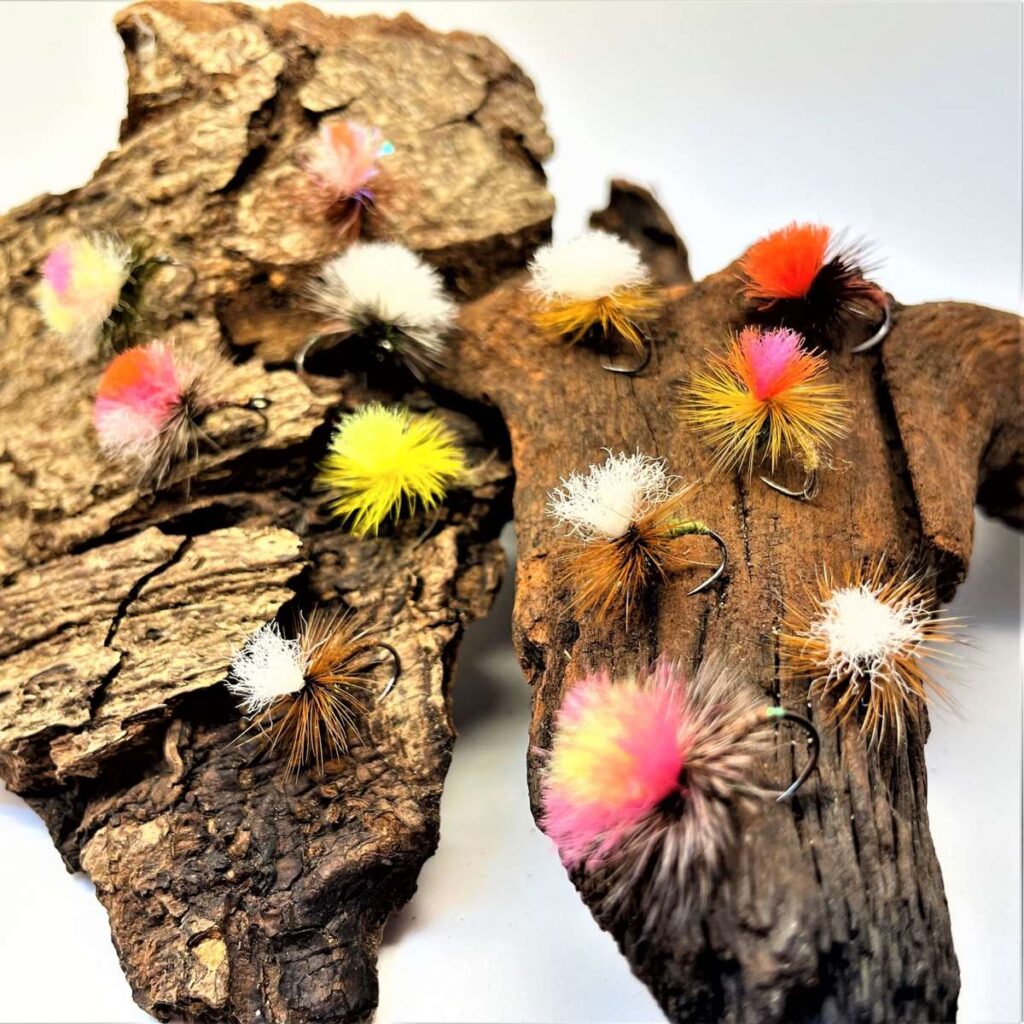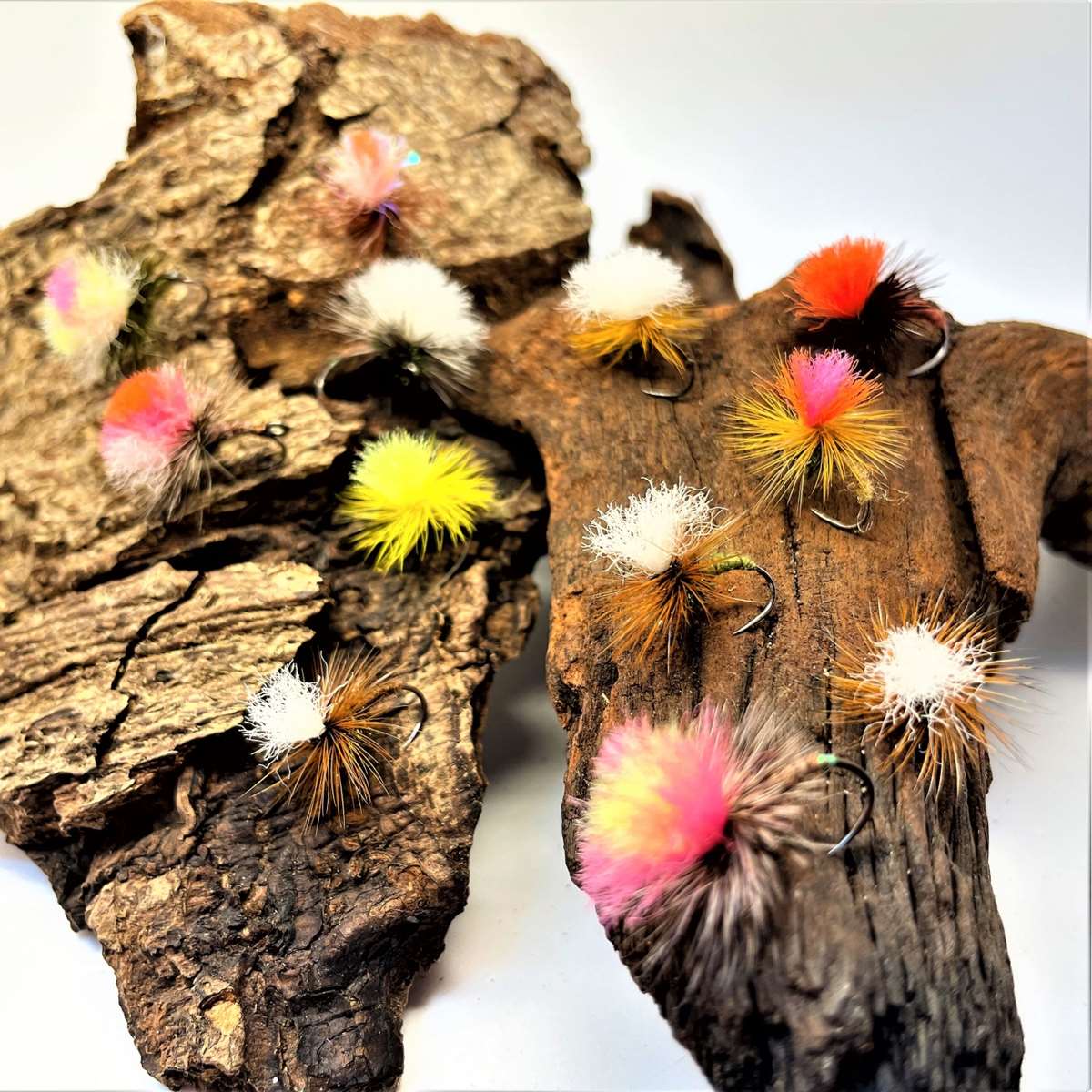

| Season | Key Hatches / Conditions | Recommended Dry Flies | What They Imitate / Why They Work |
| Spring (March–May) | Cold-to-warming water, first mayflies & midges | • Blue Winged Olive (BWO) • Parachute Adams • March Brown • Quill Gordon • Griffith’s Gnat | Early hatches of mayflies and midges. BWOs and Adams cover most early-season insects; Griffith’s Gnat for tiny midges on calm days |
| Early Summer (May–June) | Consistent insect activity, caddis and mayflies overlap | • Elk Hair Caddis • Pale Morning Dun (PMD) • Yellow Sally • Stimulator • CDC Comparadun | Caddis and PMD hatches dominate; Stimulator and Yellow Sally imitate small stoneflies; CDC Comparadun covers flat water and selective trout. |
| Mid–Late Summer (July–August) | Low, warm water; terrestrial season | • Foam Hopper / Dave’s Hopper • Parachute Ant • Foam Beetle • Royal Wulff • Chubby Chernobyl | Grasshoppers, beetles, and ants fall into the water; terrestrials and attractors draw surface strikes when insect hatches slow. |
| Fall (September–October) | Cooling water, late mayflies and October caddis | • October Caddis • Rusty Spinner • BWO (Fall Hatch) • Adams • Humpy | • Rusty Spinner • BWO (Fall Hatch) • Adams • Humpy Late-season mayflies and big orange caddisflies appear; attractors like Humpy help cover varied conditions. |
| Winter (November–February) | Cold, clear water, trout selective on small bugs | • Griffith’s Gnat • Midge Cluster • CDC Midge • Suspender Midge | Tiny midges and occasional small olives are key. Delicate presentations and micro dry flies are essential in calm water. |
Tips for Year-Round Dry Fly Success
- Match size first, then color and profile.
- Use long leaders (9–12 ft) with fine tippet (6X–7X) for spooky fish.
- Apply floatant to keep the fly riding high and desiccant powder to refresh it.
- When unsure, fish an Adams — it’s the most versatile all-season pattern.
- Keep a few attractors (Royal Wulff, Humpy, Stimulator) in your box for when nothing’s hatching.
✅ In Summary
Dry flies are all about presentation and realism — convincing trout that your artificial insect is a natural meal. They’re versatile, elegant, and deeply rewarding to fish, especially when you watch a trout rise and sip your fly off the surface.
Whether you’re fishing a tiny midge in winter or a big foam hopper in summer, dry-fly fishing connects you directly to the surface world trout live in.