
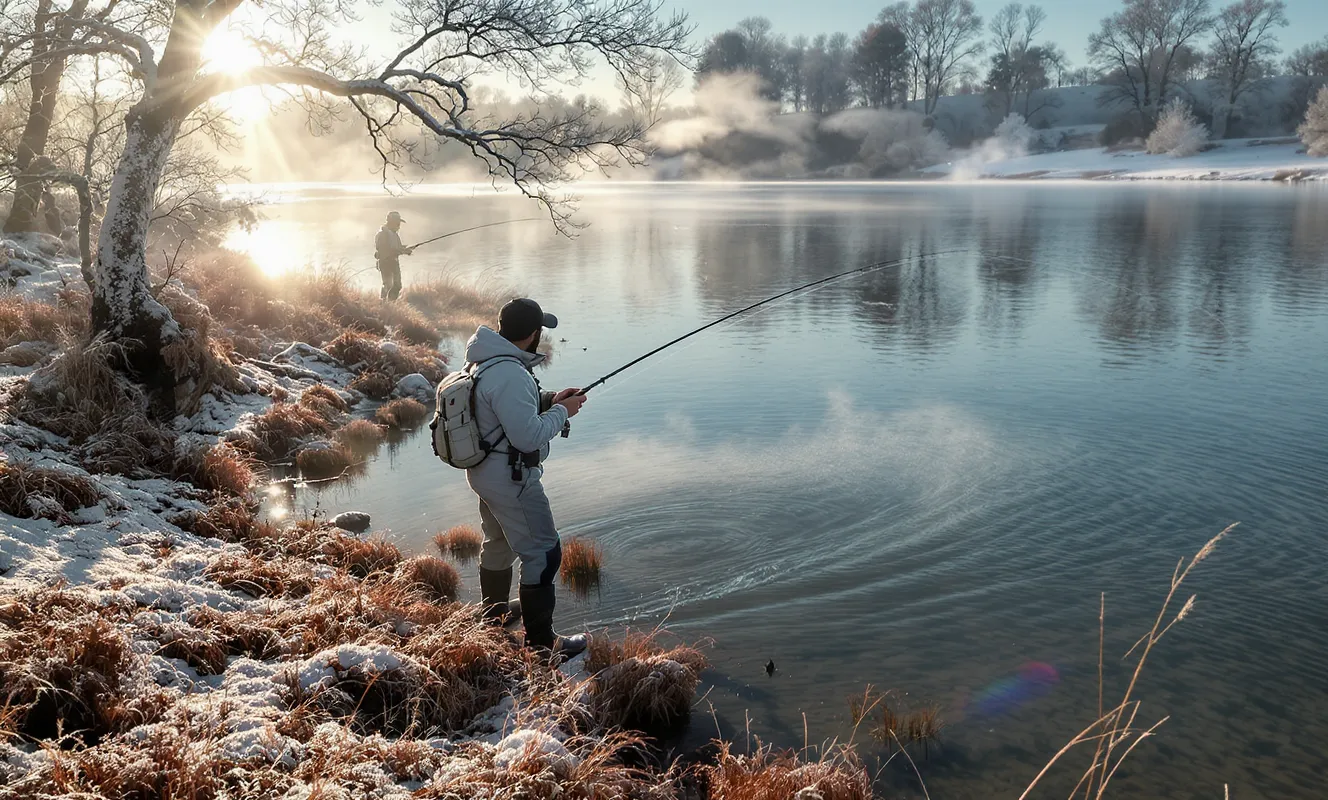

Winter Uk stillwater fly fishing offers a unique challenge and reward, especially when targeting rainbow trout. Cold air, short days, and icy banks might deter some anglers, but for those willing to adapt, winter brings clear water, less crowded fisheries, and the chance to hook trout in pristine conditions.
For beginner and intermediate fly fishers, understanding how rainbow trout behave in winter is the first step. Trout metabolism slows in colder water, meaning they feed less often but still hunt opportunistically. This article will guide you through gear choices, fly patterns, techniques, and location-specific tips to help you succeed in Uk stillwater fly fishing.
Winter rainbow trout fishing requires slowing everything down — retrieve pace, fly movement, and even your approach. Fish deeper, but don’t ignore sudden rises when hatches occur.
— Brad Gair
Understanding Winter Trout Behaviour in Uk stillwater fly fishing
Rainbow trout in UK stillwaters typically hold in deeper water when temperatures drop to 4–8°C. They conserve energy and feed during short windows, often triggered by changes in light or small insect activity. On bright, calm days, trout may move into shallower zones where midges and other insects hatch. While many anglers assume trout remain static in winter, studies from the Centre for Environment, Fisheries and Aquaculture Science (CEFAS) suggest that they still patrol feeding lanes, albeit at a slower pace. This means that a patient angler, willing to wait and observe subtle signs, can intercept them effectively during Uk stillwater fly fishing trips.
During prolonged cold spells, rainbow trout often position themselves near underwater features such as submerged trees, rocks, or old river channels within reservoirs. These structures provide shelter from currents and serve as ambush points when food drifts past. In addition to insect hatches, winter trout will opportunistically feed on small baitfish and aquatic invertebrates. If a brief spell of warmer weather occurs, expect trout to become more active, sometimes rising for terrestrials blown onto the surface.
| Water Temp (°C) | Trout Activity | Best Tactic |
|---|---|---|
| 4–6 | Slow feeding | Deep lure fishing |
| 6–8 | Moderate feeding | Nymph & buzzer patterns |
| 8+ | Active feeding | Dry flies if rising |
As shown above, temperature directly influences your approach. Matching tactics to conditions improves your success rate. In practice, this means monitoring water temperature with a simple thermometer before deciding on a strategy. Understanding that trout behaviour can shift within hours — for example, after a midday sun warms the surface — is key to maximising your catch.
Choosing the Right Gear for Winter Uk stillwater fly fishing
Rods and Lines for Uk stillwater fly fishing
A 9–10 ft rod rated #6–#7 offers the versatility to cast long distances in wind while still being sensitive enough for smaller flies. For winter, slightly stiffer action rods help punch through headwinds common on exposed stillwaters. Pair with intermediate or slow-sinking lines for subsurface work, and keep a fast-sinking line handy for probing depths where trout may be holding. Multi-tip lines are a great investment, allowing you to switch sink rates quickly without changing the entire spool.
Clothing for Uk stillwater fly fishing
Dress in layered thermal wear, waterproof outer shells, and use fingerless gloves for better line control. Merino wool base layers are excellent for retaining warmth without bulk, while breathable waterproof jackets prevent overheating during active fishing. Cold exposure reduces reaction speed, so comfort is part of performance. A thermal hat or buff will help retain body heat, and insulated socks paired with neoprene waders can make long sessions more bearable.
Accessories for Uk stillwater fly fishing
In winter, a good quality headlamp is essential for early starts or late finishes, as daylight hours are short. Polarised sunglasses remain useful to cut glare on bright days, and a small flask of hot drink can be surprisingly important for morale. Keep a small towel to dry hands, as wet skin in freezing air rapidly loses warmth.
Best Winter Flies for Uk stillwater fly fishing
Early in the day, start with searching lures like Cats Whisker, Damsel Nymph, or Black Tadpole. These patterns create enough movement to trigger reaction strikes from lethargic trout. If you see fish feeding naturally, switch to nymphs such as Pheasant Tail, Diawl Bach, or Buzzers. Buzzers are particularly effective when suspended under an indicator, allowing you to detect subtle takes.
On bright days with surface activity, small dry flies can tempt a rise. Griffith’s Gnat, CDC Emerger, and Shipman’s Buzzer are worth having in your winter box. Matching the size and colour of natural insects present can make a significant difference, especially when trout are selective. Olive and black remain reliable colours, but don’t ignore red or claret buzzer patterns, which often excel in clear, cold water.
Small dark flies work well when fish are feeding naturally; large lures are effective to provoke reaction strikes.
— Sportfish UK Guide Team
For anglers willing to experiment, try combining a small nymph on the dropper with a lure on the point. This can attract trout to the larger fly while offering them a smaller, more natural option to take.
Techniques for Uk stillwater fly fishing Success in Cold Water
Slow everything down. Use a figure-of-eight retrieve to give flies subtle movement, mimicking the slow drift of insects in cold water. In deeper water, count down your sinking line to reach the right level before starting the retrieve. For example, if fish are holding at 12 feet, count your line down to that depth consistently before each cast.
Target features like drop-offs, points, and channels where food is funnelled. These areas act as natural feeding lanes. Watch bird activity; cormorants and grebes often indicate the presence of baitfish, which in turn attract trout. Another effective winter tactic is the static buzzer method, where flies remain motionless except for natural water movement.
Pay attention to subtle takes, which may feel like slight resistance rather than an obvious tug. In winter, trout often mouth the fly before committing. Striking too hard can pull the fly away, so develop a gentle lift technique to set the hook.
Location-Based Tips for Uk stillwater fly fishing
For visitors and locals alike:
- Rutland Water: Deep basin areas hold trout; boat fishing is productive. Drifting over known drop-offs with intermediate lines can yield consistent results.
- Glen of Imaal Fisheries: Sheltered banks and consistent stocking make it a good choice during windy spells. Fish close to the bank where stocked trout often congregate.
- Leighton Reservoir: Effective with sinking line & lure tactics in cold snaps. Focus on the dam end, which tends to be deeper and holds fish longer.
- Elinor Trout Fishery: Known for buzzer hatches even in January. Use long leaders and small buzzers for best results.
In Scotland, fisheries such as Loch Leven can produce excellent sport in winter, particularly on mild days. In Wales, Llyn Brenig offers clear water and challenging conditions that reward patient anglers. See our trout fly fishing for beginners guide for more foundational tips.
Avoiding Common Winter Mistakes in Uk stillwater fly fishing
Don’t fish too fast — trout won’t chase aggressively in cold water. Avoid coloured water after heavy rain, as visibility is crucial; in winter, trout rely heavily on sight to feed. Resist the urge to constantly change flies; give patterns time to work, as trout may take several passes before committing.
Another common error is ignoring water temperature readings. Assuming trout behaviour without checking conditions can lead to wasted effort. Likewise, failing to adapt leader length to depth can mean your fly is nowhere near feeding fish. In winter, longer leaders often help reach fish without spooking them.
Finally, don’t neglect small adjustments such as changing retrieve speed or pausing mid-retrieve. These subtle changes can trigger takes when trout are hesitant.
Advanced Tactics for Experienced Anglers
Try micro-patterns to imitate tiny midges and emergers active year-round. These can be deadly when trout are selectively feeding, particularly during calm, bright spells. Use fluorocarbon leaders for better sink and invisibility in clear winter water, and experiment with double fly rigs to cover multiple feeding zones.
Another advanced technique is the washing line method, where a buoyant fly (such as a booby) on the point suspends nymphs or buzzers above the bottom. This keeps flies in the strike zone longer. In very deep water, consider using fast-sinking shooting heads to reach fish quickly.
Experienced anglers also benefit from keeping detailed logs of winter sessions, noting temperature, wind direction, and successful patterns. Over time, these records reveal patterns that improve future success.
Gear Maintenance for Uk stillwater fly fishing in Winter
Cold weather can be hard on equipment. Dry rods and reels thoroughly after use to prevent ice damage. Moisture trapped in reel gears can freeze overnight, causing stiffness or even cracking. Check fly lines for cracks and clean them regularly to maintain casting performance.
Lubricate reel mechanisms with cold-weather-appropriate grease, and store gear in a dry, frost-free environment. Hooks can rust quickly in damp conditions, so ensure flies are fully dry before storing. Carry spare leaders and tippets, as cold temperatures make fluorocarbon and nylon more brittle.
Regularly inspect wader seams for leaks, as icy water quickly becomes uncomfortable if ingress occurs. Winter maintenance not only prolongs gear life but ensures reliability when conditions demand it most.
Safety Considerations for Uk stillwater fly fishing
Winter fishing means icy banks and cold water. Wear non-slip boots and wade cautiously; even shallow slips can lead to dangerous immersion in freezing conditions. Avoid wading beyond knee depth unless absolutely necessary, as cold shock can impair movement.
Keep a change of clothes in your vehicle in case of accidental immersion. Inform someone of your fishing location and expected return time, especially on remote fisheries. Use a wading staff for extra stability, and be aware that icy ground can make bank fishing hazardous.
For more tips, see UK Winter Fly Fishing Safety: Smart Wading Tips & Gear.
Weather Awareness for Uk stillwater fly fishing
Weather can change quickly in winter. Check forecasts and be ready to adapt tactics. A sudden drop in temperature can push trout deeper, while mild spells may bring them closer to the surface. Understanding how temperature, wind, and light affect trout behaviour is key.
Wind direction is particularly important; a wind blowing onto a shore often concentrates food and fish in that area. Conversely, strong crosswinds can make presentation difficult. Cloud cover can extend feeding windows, while bright sun might push trout into shaded areas.
Read Weather Impact on Fly Fishing: UK Success Predictions for deeper insights. Keeping a small weather app or portable barometer can help anticipate changes during a session.
Preparing Off the Water for Uk stillwater fly fishing
Winter is a great time to tie flies and prepare gear for spring. Building a spring fly box now saves time later and ensures you have confidence patterns ready for early-season fishing. Practice tying winter patterns in various sizes to match potential hatches.
Maintaining gear during the off-season includes cleaning and storing lines, checking rod guides for wear, and replacing any damaged components. Sorting fly boxes by category — lures, nymphs, dries — improves efficiency on the water.
Use winter evenings to study maps of fisheries you plan to visit, noting potential hot spots and access points. Reviewing catch records from previous seasons can reveal productive areas to target when conditions are similar. For more equipment insights, visit The Essential Fly fishing gear guide.
See UK River Flies: Build Your Spring Fly Box This Winter for ideas.
Conclusion: Embracing Uk stillwater fly fishing in Winter
Winter Uk stillwater fly fishing for rainbow trout requires patience, preparation, and adaptability. Slow retrieves, careful fly selection, and an understanding of trout behaviour in cold water will put you in the best position to succeed.
Key takeaways:
- Match tactics to water temperature.
- Use sinking lines and slow retrieves.
- Target structure and watch for signs of feeding.
- Dress warmly and fish safely.
- Keep detailed notes to improve future sessions.
With the right mindset, winter can be one of the most rewarding seasons for Uk stillwater fly fishing. Whether you’re chasing your first rainbow or refining your skills, the quiet beauty of winter waters offers an experience worth braving the cold for. The stillness, the clarity of the water, and the challenge of coaxing a take in icy conditions create memories that last long after the season ends. Embrace the pace, respect the elements, and enjoy the unique rewards that winter brings.